

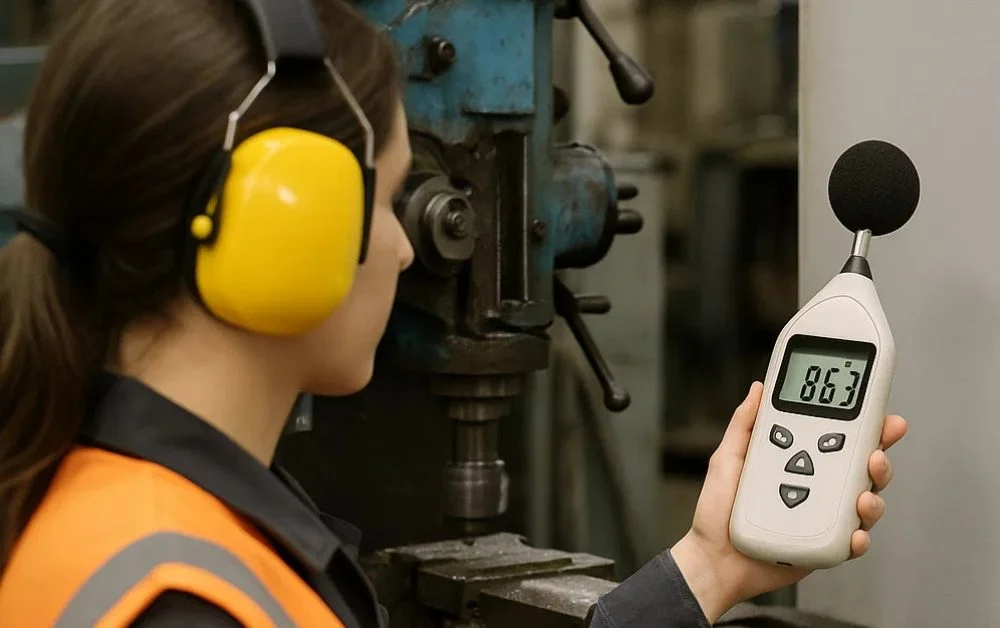
Noise is one of the biggest challenges in modern construction projects. From heavy machinery and drilling to concrete cutting and material transportation, construction sites generate significant noise levels that can impact workers, nearby communities, and the environment. As regulations tighten and awareness about health and well-being increases, Noise Assessment in UAE has become more critical than ever before.
Today, innovative technologies are transforming the way noise is measured, monitored, and managed in construction. Let’s explore the key technologies that are revolutionizing this essential field.

1. IoT-Enabled Noise Monitoring Systems
One of the most impactful innovations in Noise Assessment in UAE is the use of Internet of Things (IoT)-enabled devices. These systems use smart sensors placed strategically across a construction site to provide real-time monitoring.
- Continuous Data Collection: Unlike traditional manual measurements, IoT systems collect noise data 24/7.
- Remote Access: Project managers can access noise levels from their smartphones or dashboards.
- Automated Alerts: If noise levels exceed permitted thresholds, instant alerts are sent to responsible teams for corrective action.
This ensures compliance with regulations and helps prevent complaints from nearby residents.
2. Artificial Intelligence (AI) and Predictive Analytics
AI is changing the way noise assessments are conducted. Instead of only reporting existing levels, AI-driven models can predict potential noise issues before they occur.
- Simulation Tools: AI can simulate different construction scenarios to forecast noise impacts.
- Predictive Insights: Project managers can proactively adjust work schedules to minimize disruption.
- Machine Learning: Algorithms learn from past data to provide increasingly accurate predictions.
This shift from reactive to proactive noise management significantly improves overall efficiency.
3. Drone-Based Noise Mapping
Drones are no longer limited to aerial photography; they are now being used in acoustic studies as well.
- 3D Noise Mapping: Drones equipped with microphones and sensors can create 3D noise maps of construction sites.
- Access to Hard-to-Reach Areas: Drones can capture noise levels at heights or locations where manual measurement is unsafe.
- Faster Assessments: Entire sites can be mapped within hours, reducing time and labor costs.
Such high-tech mapping gives stakeholders a visual representation of noise distribution, making it easier to design mitigation strategies.
4. Mobile Apps and Cloud Integration
Smartphone applications and cloud-based platforms are simplifying Noise Assessment in UAE by making it more accessible.
- Mobile Apps: Workers can take instant sound readings with calibrated devices.
- Cloud Storage: Data is uploaded to secure cloud systems, where multiple stakeholders can access it simultaneously.
- Centralized Reports: Automated reports reduce manual work and ensure transparency in compliance documentation.
This technology ensures noise management is no longer a complicated, paper-heavy process.
5. Acoustic Simulation Software
Before construction even begins, advanced acoustic simulation software can predict the impact of noise on surrounding communities.
- Virtual Modeling: The software creates a digital model of the site to estimate sound propagation.
- Scenario Testing: Different construction methods can be simulated to find the quietest solution.
- Regulatory Compliance: This allows developers to ensure that projects will meet noise limits from the design stage itself.
Such software saves both time and money by preventing costly redesigns during active construction.
6. Smart Barriers and Materials with Integrated Sensors
Noise barriers and insulation materials are evolving beyond static solutions. Today, smart materials come with built-in sensors that provide feedback on their performance.
- Real-Time Effectiveness Tracking: Engineers can see whether barriers are reducing noise as intended.
- Adaptive Solutions: Some barriers can be adjusted or repositioned based on live noise data.
- Sustainable Materials: Eco-friendly and recyclable materials are now available, aligning with UAE’s sustainability goals.
This integration of smart technology enhances both efficiency and environmental responsibility.
7. Big Data and Community Engagement Platforms
Beyond measurement, noise assessment is also about communication. Big data platforms help construction companies share information with nearby communities.
- Open Access Dashboards: Residents can view live noise data and stay informed.
- Complaint Tracking: Issues can be logged and addressed quickly, improving trust.
- Data Analytics: Long-term patterns can be studied to improve future projects.
This level of transparency helps build stronger relationships between developers and communities.

Conclusion
Technologies such as IoT-enabled monitoring, AI-driven predictive tools, drones, and acoustic simulation software are revolutionizing how Noise Assessment in UAE is conducted. These advancements are making construction projects safer, more compliant, and less disruptive to surrounding communities.
For businesses looking to integrate these advanced solutions into their projects, choosing the right partner is crucial. DBZ Acoustics stands out as a trusted name in the field, offering expert noise assessment and sound management services that combine innovation, compliance, and sustainability. With their guidance, construction companies can ensure a quieter, healthier, and more responsible approach to building in the UAE.


