

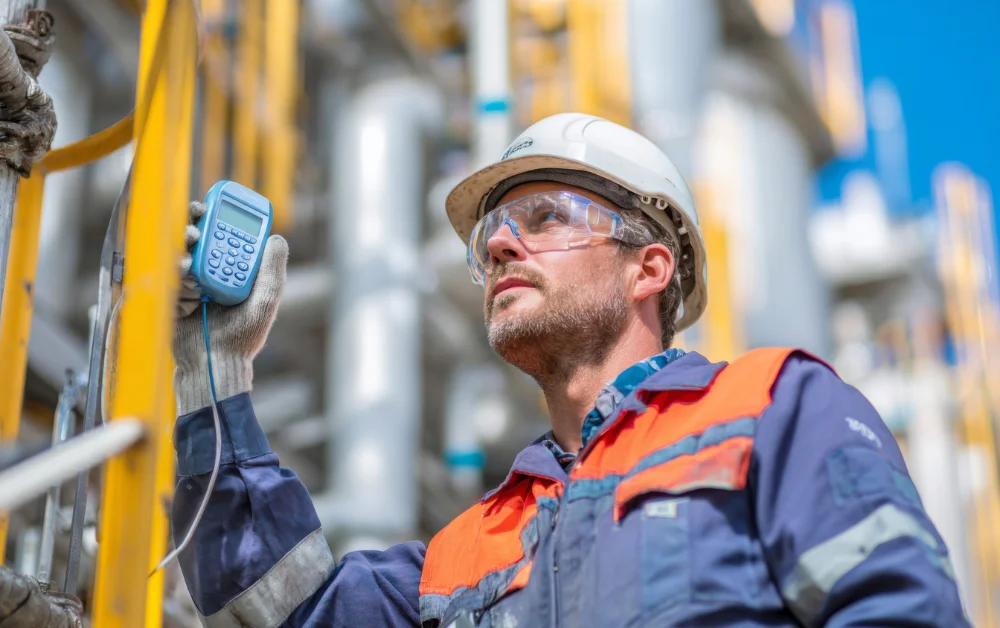
Professional acoustic testing Dubai services are necessary when construction noise interferes with your office or industrial equipment is too loud. The impact of sound pollution on the population of the UAE is more than 2.5 million people, and acoustic compliance is not only a regulatory measure but also a quality of life.
The high pace of urbanization and stringent environmental standards of Dubai require accurate sound measurements and analysis. Be it a construction company that makes sure to meet the Dubai Municipality requirements or a facility manager that has to deal with noise complaints, knowing about acoustic testing services will help you avoid expensive fines and the closure of operations.
This is a detailed guide on all that you should know about acoustic testing in Dubai including the regulatory requirements as well as the selection of the appropriate service provider to meet your specific needs.
What is Acoustic Testing and Why Dubai Businesses Need It
Acoustic testing in dubai describes Involved with a scientific measurement & analysis of the sound level, frequency and vibration for different environments. Acousticians specialize in measuring noise levels, characterizing sound and quantifying the acoustical quality of environments such as chambers, enclosures and buildings where sound is placed to check or modify sound effects, using controlled conditions.
In Dubai, the Law No. 37 of 2010 on Control of Noise level is being strictly implemented by Dubai Municipality across different areas between 45 dB(A) in residential to industrial areas up to a limit of 70 dB(A) during the day time. This could ultimately incur fines up to AED 50,000 and project halts, hence the importance of professional acoustic assessment in maintaining business operation.

Key Applications of Acoustic Testing in Dubai
The use of professional acoustic testing in Dubai has various applications in the various business environment. Pre-approval acoustic assessments are necessary to give building permits to construction projects, and regular monitoring is necessary to ensure environmental compliance of operational facilities.
Acoustic testing is applied in industrial facilities to detect equipment failures, maximize the safety of workers, and comply with occupational health requirements. Acoustic analysis is beneficial to residential and commercial buildings to enhance the level of comfort, property value, and satisfaction of tenants by having good sound insulation measures.
Types of Acoustic Testing Services Available in Dubai
Environmental Noise Assessment
Environmental noise assessment is the measurement of the sound level in the outdoor environment caused by traffic, construction and industrial activities using a precision instrument such as Brueel and Kjaer Type 2250 or RION NL-52 sound level meter. The environmental consultants of Dubai carry out 24-hour noise monitoring campaigns to determine the baseline noise levels and to determine the adherence to the municipal regulations.
Such tests usually involve the measurement of LAeq (equivalent continuous sound level), LA10 (level that was exceeded 10 percent of the time), and LA90 (level of background noise). Further frequency analysis is used to determine the particular noise sources with 1/3 octave band measurements between 20 Hz and 20 kHz, allowing specific mitigation measures to be applied to various frequency bands.
| Measurement Parameter | Description | Dubai Application | Typical Range |
| LAeq | Equivalent continuous sound level | Overall noise exposure assessment | 35-75 dB(A) |
| LA10 | Level exceeded 10% of time | Traffic noise evaluation | 45-80 dB(A) |
| LA90 | Background noise level | Ambient condition assessment | 25-60 dB(A) |
| LAmax | Maximum sound level | Peak noise events | 50-95 dB(A) |
| LAmin | Minimum sound level | Quiet period identification | 20-50 dB(A) |
Building Acoustics Testing
Building acoustics testing is a test of the acoustics of sound transmission between rooms, the effect of footfall noise, and the general acoustical comfort of structures through special devices such as B&K Building Acoustics Analyzers and impact hammers. The service is especially useful in high-rise residential and commercial projects in Dubai where sound insulation is a direct measure of the satisfaction of occupants.
Professional testing involves airborne sound insulation testing in accordance with ISO 717-1, impact sound transmission testing in accordance with ISO 717-2 and reverberation time testing with integrated impulse response systems. The sound transmission class (STC) and impact insulation class (IIC) ratings are used to specify the right acoustic treatment.
| Building Acoustic Test | Standard | Equipment Used | Dubai Requirement | Typical Results |
| Airborne Sound Insulation | ISO 717-1 | Dodecahedron speaker, Class 1 SLM | STC 50+ (residential) | 45-65 STC |
| Impact Sound Transmission | ISO 717-2 | Tapping machine, accelerometers | IIC 50+ (residential) | 45-70 IIC |
| Reverberation Time | ISO 3382 | Impulse response system | T60 < 0.8s (offices) | 0.3-2.5 seconds |
| Background Noise | ASHRAE | Calibrated microphones | NC 35-45 (offices) | NC 25-50 |
Industrial Noise Monitoring
To ensure the health of workers and to adhere to the occupational safety standards, industrial facilities in Dubai need regular noise monitoring with the help of such precision dosimeters as 3M Edge 5 or Cirrus CR:162C. Noise assessment in the workplace is done by professional acoustic consultants and it involves thorough assessment of the workplace areas that exceed 85 dB(A) TWA (Time Weighted Average) exposure limits as set by OSHAD.
Personal dosimetry studies with data logging, equipment noise mapping with sound intensity probes, and octave band analysis to determine dominant frequency components are all monitoring programs. Other advanced methods of measurement are sound power determination according to ISO 3744 and psychoacoustic analysis to determine annoyance.
| Industrial Monitoring Type | Frequency | Measurement Duration | Key Parameters | Action Level |
| Personal Dosimetry | Daily/Weekly | 8-hour TWA | LAeq, Dose%, Peak | 85 dB(A) TWA |
| Area Monitoring | Monthly | Continuous/Spot | LAeq, Octave bands | 90 dB(A) |
| Equipment Testing | Annual | 15-30 minutes | Sound Power Level | Varies by equipment |
| Vibration Assessment | Quarterly | 1-24 hours | Acceleration, Velocity | 0.315 m/s² (8-hour) |
Vibration Analysis
The vibration analysis is a complement to the acoustic testing as it involves measuring structural vibrations with tri-axial accelerometers and seismometers which can lead to secondary noise issues and destruction of the building. The construction industry in Dubai often involves the use of vibration monitoring during the process of piling, excavation, and heavy equipment use near the existing structures through the use of such equipment as Instantel Minimate Pro4 or Vibracord sensors.
The high-frequency analysis (1-100 Hz) and low-frequency monitoring (1-100 Hz) of professional vibration assessment are performed with piezoelectric accelerometers and velocity transducers respectively, to measure the peak particle velocity (PPV) and frequency-weighted acceleration levels. The analysis will involve the risk assessment of structural damage according to the DIN 4150 standards and human comfort according to the ISO 2631 standards.
| Vibration Parameter | Measurement Range | Sensor Type | Damage Threshold | Comfort Threshold |
| Peak Particle Velocity (PPV) | 0.1-100 mm/s | Geophone/Accelerometer | 2-20 mm/s | 0.14-1.4 mm/s |
| Frequency Weighted RMS | 1-80 Hz | Tri-axial accelerometer | Varies by structure | 0.315 m/s² (8-hour) |
| Dominant Frequency | 1-1000 Hz | FFT Analysis | N/A | 4-8 Hz (most sensitive) |
| Ground Coupling | Site-specific | Coupling verification | N/A | Critical for accuracy |
Dubai’s Acoustic Testing Regulations and Compliance Requirements
Dubai Municipality Noise Control Standards
Dubai Municipality implements extensive noise control policies under the Environmental Protection and Safety Sector, and particular measurement procedures that need Class 1 sound level meters that are calibrated according to IEC 61672 standards. The residential zones have 45 dB(A) LAeq daytime and 35 dB(A) LAeq nighttime criteria, which are gauged at the most vulnerable facade with A-weighted fast time response settings.
Industrial districts allow sound levels of up to 70 dB(A) during daytime and 60 dB(A) during night and further octave band analysis is necessary to identify tonal or impulsive noise elements. There are further restrictions on construction activities, whereby the construction activity can only be carried out within certain hours and that it must be accompanied by acoustic impact assessment through the use of statistical noise descriptors such as LA10 and LA90.
| Zone Type | Daytime Limit | Nighttime Limit | Measurement Position | Additional Requirements |
| Residential | 45 dB(A) LAeq | 35 dB(A) LAeq | Property boundary | Tonal penalty +5 dB |
| Commercial | 55 dB(A) LAeq | 45 dB(A) LAeq | Nearest sensitive receptor | Impulsive penalty +5 dB |
| Industrial | 70 dB(A) LAeq | 60 dB(A) LAeq | Facility boundary | Octave band analysis |
| Construction | 75 dB(A) LAeq | Prohibited | Nearest building | Impact assessment required |
| Educational/Medical | 40 dB(A) LAeq | 35 dB(A) LAeq | Building façade | Stricter enforcement |
Federal Environmental Regulations
The national environmental protection standards developed by the UAE Federal Law No. 24 of 1999 are an addition to the local Dubai regulations. These federal regulations are applicable to large industrial projects and especially those which involve hazardous substances or have significant environmental effects.
Compliance involves recording of acoustic monitoring programs, taking of noise control measures and reporting to regulatory bodies. Breaches may lead to project suspension, operation limitations and large financial fines on business operations.
International Standards Compliance
A lot of businesses in Dubai are required to meet international acoustic standards, especially those that are in free zones or those that are dealing with multinational clients. The ISO 1996 series of standards on environmental noise assessment and ISO 717 on building acoustics give guidelines on professional testing procedures.
Project specifications are often affected by ASHRAE guidelines on the HVAC noise control and WHO guidelines on noise exposure in the community. Professional acoustic consultants make sure that testing procedures and reporting templates are in line with the local and international standards of doing business internationally.

How to Choose the Right Acoustic Testing Company in Dubai
Certification and Accreditation Requirements
The choice of qualified acoustic testing providers must be checked by the professional certifications and laboratory accreditation. Find consultants who are members of international acoustical societies and who have qualifications with established professional organizations such as the Institute of acoustics or the Acoustical Society of America.
The accreditation of laboratories to ISO/IEC 17025 standards assures the quality of testing equipment calibration, measurement process and reporting to the international standards. The acoustic consultants in Dubai must also exhibit the knowledge of local regulations and approval procedures in order to complete the project efficiently.
Equipment and Technology Capabilities
Professional acoustic testing involves the use of calibrated sound level meters that comply with the standards of IEC 61672 Class 1, and the uncertainty of measurement in A-weighted measurements is less than 0.7 dB. High-end consultants use real-time analysers such as B&K 2270 with frequency analysis up to 0.1 Hz to 20 kHz, testing apparatus of building acoustics such as dodecahedron speakers and tapping machines, and long-term data collection automated monitoring.
Software features are noise modeling with CadnaA or SoundPLAN, acoustic simulation with EASE or ODEON and statistical analysis platforms to report regulatory compliance. Current acoustic consultants take advantage of the IoT-based monitoring systems with cellular data transmission, GPS synchronization, and automated verification of the calibration to achieve a higher degree of reliability in measurements.
| Equipment Category | Model Examples | Key Specifications | Calibration Interval | Typical Rental Cost (AED/day) |
| Class 1 Sound Level Meter | B&K 2250, RION NL-52 | ±0.7 dB accuracy, 20Hz-20kHz | Annual | 150-300 |
| Real-time Analyzer | B&K 2270, NTi XL2 | 1/3 octave, FFT analysis | Annual | 250-500 |
| Building Acoustics Kit | B&K 4295, NTi PA3 | Dodecahedron speaker, power amp | Annual | 800-1200 |
| Vibration Monitor | Instantel Minimate Pro4 | Tri-axial, 0.1-1000 Hz | Annual | 200-400 |
| Calibrator | B&K 4231, RION NC-74 | ±0.2 dB at 1 kHz | 2 Years | 50-100 |
Experience in Dubai Market
The environmental and regulatory situation in Dubai is unique, and acoustic consultants need to have certain local experience. The providers who are established are familiar with municipal approval procedures, typical construction issues, and the effective mitigation measures of the climate and urban environment of the region.
The case studies of successful project completion in residential, commercial and industrial sectors show that the company has extensive service capabilities. Local developer, contractor and facility manager references give good information on consultant performance and reliability.
Cost Factors for Acoustic Testing Services in Dubai
Project Scope and Complexity
The cost of acoustic testing depends highly on the scope of the project, duration of measurement and the technical complexity of the analysis needed. A simple environmental noise survey with handheld sound level meters could cost AED 3,000-5,000, whereas a complex building acoustics test that needs special equipment such as tapping machines and dodecahedron speakers when dealing with large developments could cost more than AED 50,000.
Technical considerations in the cost are the number of measurement points, length of monitoring with data recording needs, specialized instruments such as intensity probes or psychoacoustic analyzers, frequency resolution of analysis (1/1 or 1/3 octave bands) and urgency of delivery of results with expeditions of reporting. Long term monitoring programs using automated weather stations and cellular data transmission are usually more economical in terms of economies of scale.
| Service Type | Duration | Equipment Required | Analysis Complexity | Price Range (AED) |
| Basic Environmental Survey | 1-2 days | Class 1 SLM, calibrator | LAeq, LA10, LA90 | 3,000-8,000 |
| 24-Hour Noise Monitoring | 1 week | Automated logger, weather station | Statistical analysis, graphics | 5,000-12,000 |
| Building Acoustics Testing | 2-5 days | Full BA kit, impact hammer | STC/IIC ratings, reverberation | 15,000-35,000 |
| Industrial Noise Assessment | 3-7 days | Dosimeters, octave analyzer | Exposure mapping, PPE recommendations | 8,000-25,000 |
| Vibration Monitoring | 1-4 weeks | Tri-axial sensors, data logger | PPV analysis, structural assessment | 10,000-30,000 |
Equipment and Personnel Requirements
Professional services also entail a high cost of specialized acoustic testing equipment and certified personnel. The cost of purchasing, calibration and maintenance of Class 1 sound level meters, building acoustics testing equipment and vibration analyzers is very high.
Experienced acoustic consultants charge high prices based on their specialised training, professional qualifications and training needs. Projects that involve more than one technician, long monitoring durations or specialized skills are of course more expensive but offer correspondingly more value.
Regulatory Compliance Documentation
Extensive reporting and compliance documentation are value-added to simple measurement services. The professional reports will consist of regulatory analysis, mitigation recommendations, and formatted submissions that comply with the Dubai Municipality requirements.
Good documentation saves time in the approval process, facilitates permit applications and offers legal safeguards against compliance issues. Professional reporting investment can be very fruitful in terms of quicker project approvals and lower regulatory risk.

Benefits of Professional Acoustic Testing for Dubai Businesses
Regulatory Compliance and Risk Management
The professional acoustic testing will help to avoid the expensive fines and business interruptions by ensuring that the business is in line with the stringent environmental regulations in Dubai. Periodic surveillance programs detect possible problems before they develop into regulatory breaches or community grievances.
Compliance that is documented gives the company legal protection and shows corporate responsibility to the stakeholders, customers, and the regulatory bodies. Professional assessment assists the businesses to go through complicated approval procedures and keep operating licenses to sustain the business.
Operational Efficiency and Cost Savings
Acoustic testing determines equipment failures, inefficient operations, and maintenance needs that affect productivity and cost of operation. Noise control measures are usually proactive and will save energy, increase the life of equipment and also enhance the working environment.
Early detection of acoustic issues eliminates expensive retrofit and operational downtime. Noise control improvement recommendations by the professionals provide long term cost savings by enhancing efficiency and minimizing maintenance needs.
Enhanced Property Values and Tenant Satisfaction
Good acoustic environments have a great influence on the property prices and retention of tenants in the competitive real estate market of Dubai. Acoustic design and testing by professionals guarantee comfortable living and working conditions with high rent and sale prices.
The acoustic comfort has a direct impact on the occupant productivity, health and satisfaction of commercial and residential buildings. Professional acoustic testing and investment yields quantifiable returns in the form of lower vacancy rates and increased property values.
Common Acoustic Testing Challenges in Dubai
Environmental Factors and Climate Considerations
Extremes of weather in Dubai present their own issues to acoustic testing equipment and procedures. Temperatures over 50 o C can have an influence on measurements, plus it affects equipment reliability requiring special calibration and protection.
Outdoor measurements and equipment performance are influenced by sandstorms and fluctuating humidity. Experienced acoustic consultants are aware of these factors and adopt the necessary measures to guarantee accurate measurement results and equipment safety.
Urban Development and Construction Noise
The ongoing urbanization of Dubai provides complicated acoustic conditions with a variety of sources of noise and different sound levels during the day. The separation of various noise sources and the setting of baseline conditions are complex measurement and analysis methods.
The construction activities create short-term noise events that make it difficult to monitor the long-term programs. The statistical analysis techniques and special measurement protocols applied by professional consultants enable them to determine the acoustic environment in dynamic urban environments.
Multi-Cultural Communication and Standards
The international business environment in Dubai demands that acoustic consultants should be able to communicate with the stakeholders of different cultural and technical backgrounds. Various nations have different acoustic standards and expectations that have to be aligned with local standards.
The professional service providers are required to be culturally sensitive and at the same time be technically accurate and regulatory compliant. Effective communication of acoustic concepts, measurement findings, and mitigation strategies is a guarantee of project success in multicultural teams.
Advanced Acoustic Testing Techniques and Methodologies
Sound Intensity Measurement and Near-field Analysis
Dual-microphone probe sound intensity measurement allows the accurate determination of the noise sources in complex industrial settings that characterize the manufacturing and petrochemical plants of Dubai. The method is used to measure the sound pressure and the velocity of the particles with the help of the phase-matched pairs of microphones and to determine the sound power levels regardless of the conditions of the acoustic environment.
Near-field acoustic holography (NAH) offers a detailed visualization of sound radiation patterns of machinery and equipment to allow specific noise control solutions. Advanced practitioners use scanning intensity systems with GPS positioning to conduct large-scale industrial surveys to produce detailed noise maps with source identification accuracy of less than 1 dB.
Psychoacoustic Analysis and Noise Quality Assessment
Contemporary acoustic testing uses psychoacoustic parameters such as loudness (sones), sharpness (acum), roughness (asper), and fluctuation strength to determine the quality of noise beyond the simple decibel scale. These parameters are more associated with human perception and level of annoyance, which is critical in the mixed-use developments in Dubai where the noise character affects the acceptance of the community.
Artificial head measurements in binaural recording methods are used to record the spatial audio properties to be used in the detailed assessment of annoyance. Further analysis involves tonality detection based on prominent tonal ratio (PTR) calculation and impulsiveness based on IEC 61672-1 requirements of penalty assessment applications.
| Psychoacoustic Parameter | Unit | Measurement Range | Application in Dubai | Correlation with Annoyance |
| Loudness | Sones | 0.1-1000 sones | HVAC system assessment | High (r = 0.85) |
| Sharpness | Acum | 0.5-8 acum | Traffic noise evaluation | Moderate (r = 0.65) |
| Roughness | Asper | 0-20 asper | Industrial equipment | High (r = 0.78) |
| Fluctuation Strength | Vacil | 0-5 vacil | Construction noise | Moderate (r = 0.58) |
| Tonality | Tu | 0-10 Tu | Mechanical systems | High (r = 0.82) |

Future Trends in Acoustic Testing Technology
Digital Innovation and Smart Monitoring
The new technologies such as IoT sensors with edge computing, cloud-based monitoring systems based on AWS and Azure infrastructure, and pattern recognition algorithms are transforming the acoustic testing services. Smart monitoring systems offer real-time measurements with response times under a second, automatic alerts with adjustable thresholds, and predictive analytics with machine learning algorithms trained on past noise history.
Tablet-based systems allow field technicians to perform preliminary assessments with mobile applications that have real-time FFT analysis, GPS geotagging, and automated report generation. High-tech platforms combine meteorological information of the local weather stations, traffic flow information of the RTA systems and construction schedule databases to model the noise impact comprehensively.
| Technology Category | Current Capability | 2025-2030 Development | Dubai Implementation | Cost Impact |
| IoT Acoustic Sensors | Basic LAeq monitoring | AI-powered source identification | Smart city integration | -30% monitoring costs |
| Cloud Analytics | Statistical reporting | Predictive maintenance alerts | Real-time compliance dashboards | -25% analysis time |
| Mobile Computing | Handheld SLM apps | Professional-grade tablet systems | Field efficiency improvement | -40% site visit time |
| AI Pattern Recognition | Simple threshold alerts | Complex event classification | Automated violation detection | -50% false alarms |
Sustainable Development and Green Building Standards
The desire of Dubai to implement sustainable development is a factor that leads to the demand of acoustic testing services to support the green building certifications and environmental objectives. Acoustic comfort is becoming an important part of sustainable design in LEED and BREEAM standards.
The environmental impact assessment is combined with conventional noise control measures by professional acoustic consultants, which helps Dubai to pursue the vision of sustainable urban development. The use of advanced modeling methods is used to maximize the acoustic performance and reduce the use of energy and materials.
Frequently Asked Questions
What are the typical noise limits in Dubai residential areas?
Dubai Municipality establishes a residential noise level of 45 dB(A) during the day (6 AM to 10 PM) and 35 dB(A) during the night (10 PM to 6 AM). These are the limits of noise at the property boundaries and they are strictly followed to ensure that the comfort and health of the residents is not compromised.
How long does acoustic testing take in Dubai?
The length of time for an Acoustic Testing will depend on the scope of a project with one day being common for simple environmental surveys, or up to several weeks for complex building acoustics. The majority of environmental noise evaluations need to use a 24-hour duration monitoring period to describe variation of daily profiles and to demonstrate conformance with regulations.
Do I need acoustic testing for construction permits in Dubai?
Noise impact assessments are needed for most construction projects in Dubai as part of the environmental approval process. Residential and mixed-use projects near sensitive receptors such as hospitals, schools or residential uses usually require sound testing to obtain permits and show compliance with sound ordinances.
What equipment is used for professional acoustic testing?
Professional acoustic testing involves calibrated Class 1 sound level meters, frequency analyzers, vibration monitors and building acoustics testing equipment that is of international standard. High-level consultants use real-time analyzers, automated monitoring systems, and special software to have the ability to assess and analyze in a comprehensive manner.
How much does acoustic testing cost in Dubai?
The average cost of acoustic testing in Dubai is between AED 3,000 and AED 50,000 and above depending on the type of environmental testing and the level of building acoustics testing. The costs are based on the scope of the project, the duration of measurement, the equipment needed, and the complexity of the analysis required to comply with the regulations and achieve the project goals.
Can acoustic testing help reduce operational costs?
Professional acoustic testing determines the equipment inefficiencies, maintenance needs, and operational problems that affect costs and productivity. The proactive noise control strategies tend to minimize energy use, increase equipment life, and enhance the workplace conditions, which provide quantifiable cost benefits in the long term.
Conclusion
DBZ professional acoustic testing Dubai services offer the necessary assistance to companies operating in the UAE and trying to maneuver in the intricate regulatory landscape of the country, as well as streamlining the operations and environmental standards. In construction projects that need municipal approvals, as well as industrial facilities that need to maintain the standards of worker safety, the quality acoustic assessment provided by DBZ will provide quantifiable value in terms of risk mitigation and operational efficiency.
The further urbanization of Dubai and the intensification of environmental standards contribute to the fact that professional acoustic testing by DBZ is becoming a more important business investment. Businesses that focus on acoustic compliance and environmental responsibility of the services offered by DBZ place themselves in a sustainable development in the competitive market of the UAE.
Prepared to make your project acoustically compliant to Dubai? Call the certified acoustic testing experts at Contact DBZ today and have a thorough examination done to suit your needs and compliance requirements. Our professional team provides quality services and feasible solutions that safeguard your business interests and help Dubai achieve its vision of sustainable urban development.


