

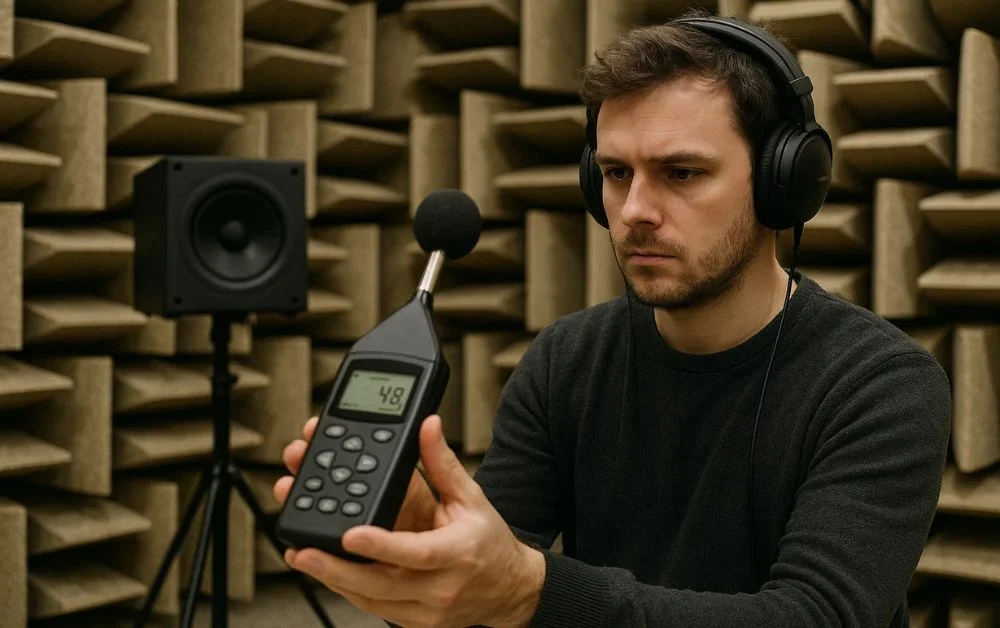
In the modern world, consumer electronics play an integral role in daily life. From smartphones and wireless earbuds to home speakers and televisions, audio quality has become a decisive factor for consumers. Poor sound can ruin user experience, while high-quality audio creates immersive experiences. To guarantee this level of performance, manufacturers rely on Acoustic Testing Dubai methods, which systematically evaluate and optimize sound quality in electronic devices.

Understanding Acoustic Testing
Acoustic testing refers to the scientific evaluation of sound in a specific environment or device. It involves measuring sound pressure, frequency response, distortion, and noise levels to ensure optimal performance. In consumer electronics, these tests help engineers identify defects, optimize components, and maintain consistency across products.
For example, when developing a pair of wireless earbuds, manufacturers must consider how the speaker drivers, casing design, and microphone placement affect audio. Without proper acoustic testing, these variables can lead to uneven frequency response, unwanted vibrations, or sound leakage, which diminish user satisfaction.
Key Acoustic Testing Methods
Several acoustic testing methods are used to ensure that consumer electronics deliver high-quality sound. Here are some of the most critical ones:
1. Frequency Response Testing
Frequency response testing measures how accurately a device reproduces audio signals across the audible spectrum, typically 20 Hz to 20 kHz. This test identifies whether certain frequencies are too loud or too weak, allowing engineers to adjust drivers, equalizers, or digital signal processing algorithms to create balanced sound.
2. Total Harmonic Distortion (THD) Analysis
Total Harmonic Distortion (THD) evaluates how much unwanted noise or distortion a device introduces into the audio signal. High THD can make music or speech sound harsh or unnatural. Acoustic testing ensures THD remains at minimal levels, enhancing clarity and fidelity.
3. Sound Pressure Level (SPL) Measurement
SPL measurement quantifies the loudness a device can achieve without introducing distortion. This testing is essential for speakers, headphones, and soundbars to ensure they deliver adequate volume while maintaining sound integrity.
4. Impulse and Transient Response Testing
Impulse response testing examines how quickly a device reacts to sudden changes in sound, such as drum hits or sharp consonants in speech. Accurate transient response ensures that audio remains crisp and dynamic, providing a more realistic listening experience.
5. Environmental Acoustic Testing
Consumer electronics often operate in diverse environments, from quiet bedrooms to noisy public spaces. Environmental acoustic testing evaluates how devices perform in real-world conditions, including echo, reverberation, and background noise. This step ensures that noise-cancellation features, speaker clarity, and microphone performance meet high standards.
6. Vibration and Mechanical Noise Testing
Internal vibrations from moving parts, like cooling fans or speaker drivers, can create mechanical noise that interferes with audio quality. Acoustic testing detects and minimizes these unwanted sounds, resulting in cleaner playback.
Importance of Acoustic Testing in Dubai
Dubai has emerged as a hub for high-tech electronics retail, innovation, and manufacturing. As consumers in the city increasingly demand premium audio experiences, Acoustic Testing Dubai ensures that products meet global quality standards. By conducting comprehensive testing in Dubai-based labs or facilities, manufacturers can guarantee consistency, reliability, and superior sound performance for end-users.
Benefits of Acoustic Testing
- Enhanced User Experience: Devices that pass rigorous acoustic tests provide clear, balanced, and immersive sound.
- Product Consistency: Testing ensures every unit performs as expected, reducing complaints and returns.
- Competitive Advantage: Brands offering superior audio quality can differentiate themselves in a crowded electronics market.
- Regulatory Compliance: Acoustic tests also ensure compliance with safety and emission standards, which may include noise regulations in urban areas.
Emerging Trends in Acoustic Testing
Advances in technology continue to improve acoustic testing methods. Some notable trends include:
- AI-Enhanced Testing: Artificial intelligence can analyze massive datasets from acoustic tests to detect patterns, predict failures, and suggest optimizations.
- 3D Acoustic Modeling: Engineers now simulate sound propagation using 3D models before physical prototypes, saving time and cost.
- Portable Testing Solutions: With the rise of mobile electronics, on-site testing solutions allow quick assessments during assembly and quality control.
- Eco-Friendly Materials: Acoustic testing now also evaluates sustainable materials to ensure they maintain sound quality without environmental compromise.

Conclusion
High-quality audio in consumer electronics is not just a feature—it’s a standard that defines user satisfaction and brand reputation. Through comprehensive Acoustic Testing Dubai, manufacturers can measure, evaluate, and optimize every aspect of sound reproduction, from frequency response to mechanical noise control. These testing methods guarantee that consumers enjoy clear, crisp, and immersive audio experiences, whether using headphones, smart speakers, or home entertainment systems.
For companies seeking professional expertise in acoustic testing, DBZ Acoustical shines as a trusted partner. With advanced techniques, industry knowledge, and reliable testing solutions, they ensure that every product delivers exceptional sound quality, setting a benchmark for excellence in Dubai and beyond.


